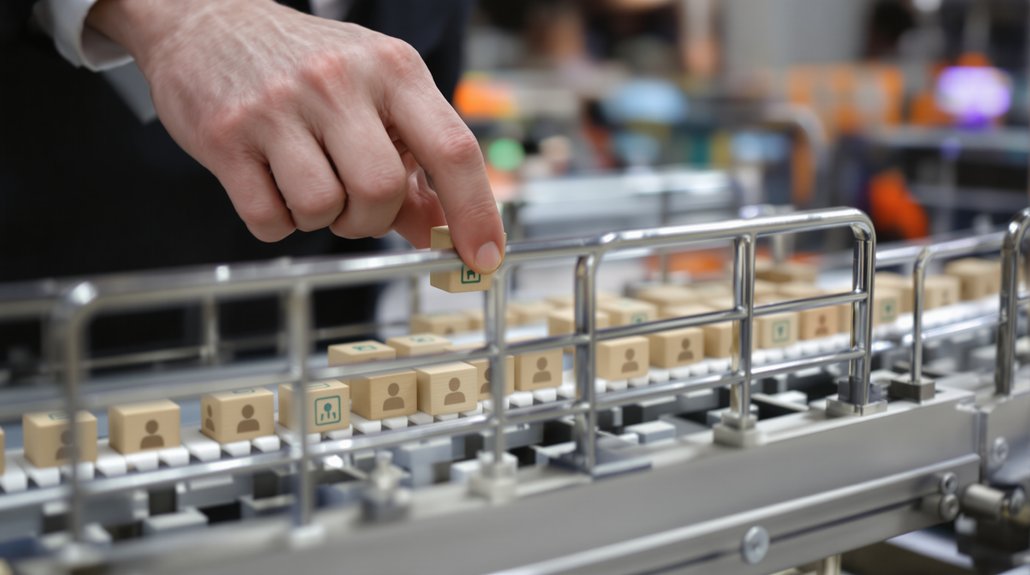
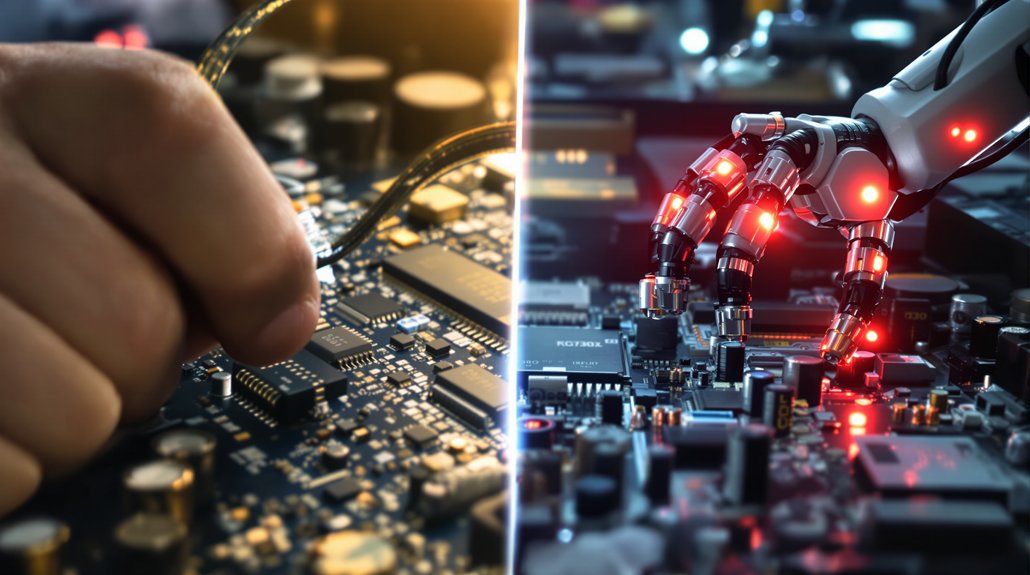
You’ll find human review outperforms automation when evaluating culturally offensive content, where context and regional nuances matter most. Angry customers need real conversations that provide emotional acknowledgment, not just scripted solutions. Medical and legal decisions require accountability that algorithms can’t provide, as no one can be held liable for automated choices affecting lives. Creative work demands human judgement to assess emotional resonance and authenticity that automation misses. Your brand voice needs human editors who’ll protect the personality and subtle nuances that differentiate you from competitors, ensuring your content doesn’t become generic cookie-cutter material that fails to connect with your audience.
When Offensive Content Requires Cultural Judgement

While automated systems excel at detecting universally prohibited content like spam or malware, they often stumble when evaluating material that’s offensive in one culture but acceptable in another. You’ll find AI struggles with religious imagery, political satire, and historical references that carry different meanings across borders. What’s considered respectful discourse in Amsterdam might violate norms in Jakarta.
Human reviewers understand context, intent, and cultural nuance in ways algorithms can’t replicate. They recognise when seemingly offensive language serves educational purposes or social commentary. You need people who grasp why certain gestures, symbols, or phrases demand different responses depending on regional sensibilities. This cultural intelligence protects genuine expression while maintaining community standards that automation alone would misinterpret.
Why Angry Customers Need Real Conversation
When customers escalate complaints to “speak with a manager,” they’re not just seeking solutions – they’re demanding acknowledgment of their frustration. Automated systems can’t read emotional nuance or provide the cathartic release that human conversation offers.
| What Automation Delivers | What Humans Provide |
|---|---|
| Scripted apologies | Genuine empathy |
| Ticket numbers | Personal investment |
| Generic solutions | Creative problem-solving |
| Deflexion tactics | Accountability |
| Emotional dead-ends | Cathartic dialogue |
You’ll break free from customer service failures when you recognise that angry people need validation, not efficiency. They’re seeking human connection during moments of vulnerability. Real conversations transform adversarial exchanges into collaborative resolutions. That’s liberation from the corporate script – for both parties.
Medical and Legal Decisions Too Risky to Automate
Because algorithms can’t be held liable in court or face medical boards for malpractice, we’ve created a dangerous accountability gap in high-stakes decisions. When software denies your insurance claim or flags you as a surgical risk, there’s no practitioner whose licence is on the line.
You deserve decision-makers who stake their professional reputation on your case. A doctor weighs nuances your CT scan might miss. A judge considers circumstances no sentencing algorithm captures. These professionals face consequences when they’re wrong – their careers, their credentials, their freedom to practise.
Automation in medicine and law creates unaccountable power over your body and liberty. You can’t cross-examine an algorithm. You can’t appeal to a system’s conscience. Real expertise means real responsibility.
Why Creative Work Still Needs a Human Eye
Though algorithms can now generate images, text, and music on demand, they can’t tell you whether their output actually connects with an audience. You need human judgement to assess emotional resonance, cultural nuance, and authentic meaning. Automation lacks the lived experience to recognise when something feels forced or fails to honour your community’s voice.
| What Automation Does | What You Need Humans For |
|---|---|
| Generates content quickly | Evaluates cultural sensitivity |
| Follows patterns and rules | Recognises authentic emotion |
| Produces technical accuracy | Guarantees message resonates with your values |
Creative work demands more than efficiency – it requires understanding context, reading subtext, and protecting your narrative from generic sameness. Your stories deserve guardians who comprehend their power.
How Human Editors Protect Your Brand Voice
Your brand voice isn’t just a style guide – it’s the personality that makes your audience choose you over competitors. Automation can’t recognise the subtle nuances that define your unique tone. It’ll miss cultural references, misread context, and flatten the distinctive edge that sets you apart.
Human editors understand what makes your brand yours. They catch when automated content sounds generic or sterile. They preserve your irreverent humour, your bold stance, or your authentic vulnerability – whatever makes you memorable.
While AI follows patterns, editors make judgement calls. They know when to break grammar rules for impact, when colloquial language strengthens connection, and when formal tone undermines your message. They’re your guardians against the cookie-cutter content that automation produces, ensuring you never sound like everyone else.