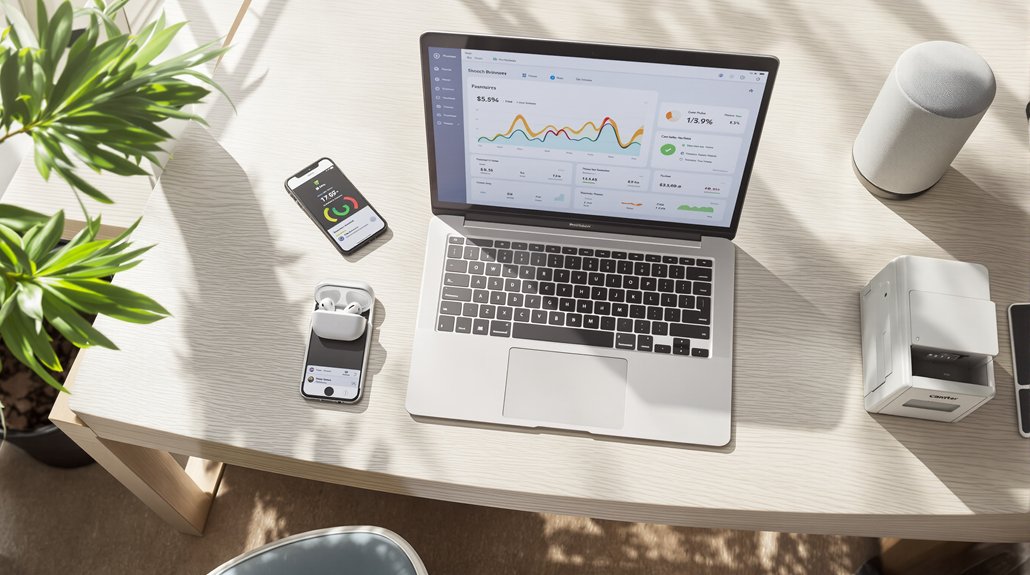

Start by selecting a platform that matches your contact list size – use free tools like Mailchimp for under 1,000 contacts or mid-tier options like ActiveCampaign for larger lists. Map your simplest lead journey from first click to contact, then create a welcome email with 2-3 follow-ups triggered by form submissions. Test your workflow before launching to catch errors early. You’ll reclaim over 16 hours weekly from manual tasks while responding to leads instantly, and the strategies below will show you exactly how to scale from there.
What Lead Generation Automation Workflows Actually Do?

At their core, lead generation automation workflows handle the repetitive tasks that move prospects through your sales funnel without manual intervention. They free you from the tedious cycle of sending follow-up emails, qualifying leads, and scheduling appointments manually.
These workflows capture visitor information through forms, segment contacts based on their behaviour, and deliver targeted content automatically. When someone downloads your ebook, the system sends them a welcome email, tags them appropriately, and triggers relevant follow-ups – all while you focus on strategic work.
You’ll escape the bottleneck of manual lead nurturing. Instead of spending hours on administrative tasks, you’re building relationships and closing deals. The automation runs 24/7, ensuring no lead falls through the cracks while you sleep.
Why Automated Lead Generation Saves Small Businesses 15+ Hours Weekly
When you manually process leads, you’re trapped in an endless cycle of data entry, email follow-ups, and lead qualification calls that consume your workday. Automation breaks these chains by handling repetitive tasks while you focus on closing deals.
| Manual Process | Automated Process |
|---|---|
| 8 hours weekly entering lead data into your CRM | Instant capture and organisation of lead information |
| 5 hours crafting individual follow-up emails | Pre-built sequences trigger automatically based on behaviour |
| 3 hours qualifying unready prospects | Smart scoring identifies sales-ready leads instantly |
You’ll reclaim 16+ hours weekly – time you can redirect toward revenue-generating activities. Your leads receive immediate responses regardless of timezone, and nothing falls through the cracks. This isn’t just efficiency; it’s freedom from administrative prison.
Pick an Automation Platform That Fits Your Business Size
Three critical factors determine which automation platform will actually work for your business: your current contact list size, monthly budget, and technical skill level.
You don’t need enterprise software when you’re starting out. Match your platform to where you are now, not where you hope to be in five years.
Platform selection criteria:
- Under 1,000 contacts: Choose free or low-cost tools like Mailchimp, HubSpot Free, or Brevo
- 1,000-10,000 contacts: Invest in mid-tier platforms like ActiveCampaign or ConvertKit
- Limited technical skills: Pick drag-and-drop builders instead of code-heavy solutions
- Tight budget: Start with one platform that handles multiple functions rather than connecting separate tools
You’ll upgrade naturally as your list grows. What matters now is implementation, not perfect selection.
Map Your Simplest Lead Journey From Click to Contact

Before you build anything, you need to see the exact path a lead takes from first click to becoming a contact in your system. Grab a piece of paper and draw it out. Start with where they find you – an ad, social post, or search result. What happens next? They click, land on a page, then what? Do they download something? Fill out a form? Watch a video?
Map each step without overcomplicating it. You’re looking for the straightest line from stranger to lead. Most beginners create workflows with too many branches and conditions. Don’t. Your first automation should handle one simple journey.
Once you’ve mapped this path, you’ll know exactly which triggers, actions, and messages you need. This clarity eliminates guesswork and wasted effort.
Build Your First Lead Generation Workflow in Under an Hour
Now that you’ve mapped your lead journey, you’re ready to build the automation that runs it. You don’t need complex software or technical expertise – just a clear plan and one focused hour.
Start with these essential steps:
- Choose one automation platform that offers a free tier (like Mailchimp, HubSpot, or ActiveCampaign)
- Create your welcome email that delivers the promised resource and sets expectations
- Set up your trigger based on form submission or landing page action
- Add a follow-up sequence of 2-3 emails spaced over one week
Connect each element sequentially. Test the workflow by submitting your own email. You’ll break free from manual follow-ups and start converting leads while you sleep. Your first automation doesn’t need perfection – it needs momentum.
Avoid These Five Mistakes That Kill Beginner Automation
Most beginners sabotage their first automation workflow before it ever generates a single lead. You’re probably making at least one of these critical errors right now.
First, you’re over-complicating things. Complex workflows break easily and confuse your audience. Second, you’re neglecting to test your sequences before launching them. Broken links and formatting errors destroy credibility instantly. Third, you’re automating without strategy – sending generic messages that repel rather than attract leads. Fourth, you’re ignoring data. Your workflow tells you what’s working, but you’re not listening. Finally, you’re setting it and forgetting it. Successful automation requires monitoring and refinement.
Break free from these mistakes, and you’ll transform your workflow from lead-killer to lead-magnet.
Set Up Automated Lead Scoring to Prioritise Your Best Prospects

Lead scoring separates casual browsers from serious buyers, so you’ll know exactly where to focus your energy. You’ll start by defining what actions and behaviours indicate genuine purchase intent – things like email opens, demo requests, or pricing page visits. Then you’ll set up automated rules that assign point values to each activity, creating a real-time ranking system that identifies your hottest prospects without manual tracking.
Define Your Scoring Criteria
Before you can prioritise leads effectively, you’ll need to establish clear scoring criteria that reflect what makes a prospect valuable to your business. Break free from guesswork by identifying concrete indicators of purchase intent and ideal customer fit.
Consider these essential scoring factors:
- Demographic data: Job title, company size, industry, and budget authority that match your target customer profile
- Engagement behaviours: Email opens, website visits, content downloads, and webinar attendance that signal active interest
- Explicit actions: Demo requests, pricing page views, and trial signups that indicate buying readiness
- Negative indicators: Unsubscribes, bounced emails, or mismatched criteria that disqualify prospects
Assign point values to each criterion based on their correlation to actual conversions. You’ll refine these weights as you gather data.
Automate Point Assignment Rules
Transform your scoring criteria into action by configuring your marketing automation platform to assign points automatically whenever prospects meet your defined conditions. Set triggers that award points when leads open emails, visit pricing pages, download resources, or submit forms. You’ll eliminate manual tracking and free yourself from repetitive tasks that consume valuable time.
Configure negative scoring too – subtract points when leads unsubscribe, go inactive, or visit career pages. This guarantees you’re focusing energy where it matters most.
Test your rules with sample contacts before launching. Watch how points accumulate across different prospect behaviours, then refine thresholds that determine when leads become sales-ready. Your automation works tirelessly behind the scenes, qualifying prospects while you concentrate on closing deals and growing your business.
Track Your First 30 Days: Is Lead Automation Paying Off?

How do you know if your automation efforts are actually working? You’ll measure what matters during your first 30 days. Don’t get lost in vanity metrics – focus on numbers that directly impact your bottom line.
Track these essential metrics:
- Lead volume changes – Compare leads generated before and after automation
- Conversion rate shifts – Monitor how many leads become qualified opportunities
- Time saved per week – Calculate hours reclaimed from manual tasks
- Cost per lead – Determine if automation reduced your acquisition expenses
Set up a simple spreadsheet to log these weekly. If you’re not seeing improvement by day 30, adjust your workflow triggers or scoring criteria. Liberation comes from data-driven decisions, not guesswork. Your automation should prove its value quickly – demand results.
Choose Your Next Automation: Three Quick Wins After Email
Once your email automation proves its worth in the first 30 days, you’re ready to expand. Break free from manual tasks by adding these three automations that deliver immediate impact.
| Automation Type | Freedom Gained |
|---|---|
| Lead Scoring | Stop chasing cold prospects – focus only on hot leads ready to buy |
| SMS Follow-ups | Cut through inbox clutter and reach leads where they actually respond |
| Social Media Retargeting | Escape the guessing game – show ads only to engaged visitors |
Each automation builds on your email foundation without overwhelming your system. Lead scoring identifies your best opportunities automatically. SMS captures attention when emails go unread. Retargeting keeps you visible without constant posting. Pick one, implement it this week, and watch your pipeline fill while you reclaim your time.
Use AI Chatbots to Qualify Leads on Autopilot
You’ll escape the tedious back-and-forth that drains your energy. Set up qualifying questions once, then let the bot handle every conversation. It’ll ask about budget, timeline, pain points, and authority – filtering out tyre-kickers before they reach your inbox.
Here’s what happens automatically:
- Unqualified leads receive helpful resources and exit the funnel
- Warm prospects get tagged and added to nurture sequences
- Hot leads book directly onto your calendar with context pre-filled
- All conversations sync to your CRM without manual data entry
You’re freed from repetitive interrogation. The chatbot becomes your tireless qualifier, working every timezone without complaint.