
You’re losing 5-10 hours weekly to manual tasks that automation handles in seconds – time that could drive revenue instead of repetitive data entry. Your technology stack should work together through digital bridges that trigger automatic actions, eliminating human errors and context-switching that drain productivity. The right automation reclaims strategic time, reduces mistakes by 80%+, and captures revenue opportunities you’re currently missing. Focus on simple, repetitive processes first, prioritise tools that integrate over isolated features, and demand measurable results within 30 days to build your liberation machine.
Why Manual Work Is Costing Your Small Business More Than You Think

While you’re manually entering data into spreadsheets or copy-pasting customer information between systems, your competitors are serving more clients and growing their revenue. Manual processes trap you in repetitive tasks that drain hours from your day. You’re paying twice: once in wasted time and again in missed opportunities.
Every manual task carries hidden costs. Data entry errors create expensive mistakes. Context-switching between systems kills your focus and productivity. Your team burns energy on tedious work instead of strategic initiatives that drive growth.
The real cost isn’t just time – it’s your freedom. You’re stuck maintaining systems instead of building your business. You can’t scale when every new client means more manual work. Breaking free from these constraints starts with automation.
Small Business Automation: Connecting Your Everyday Tools Without Technical Skills
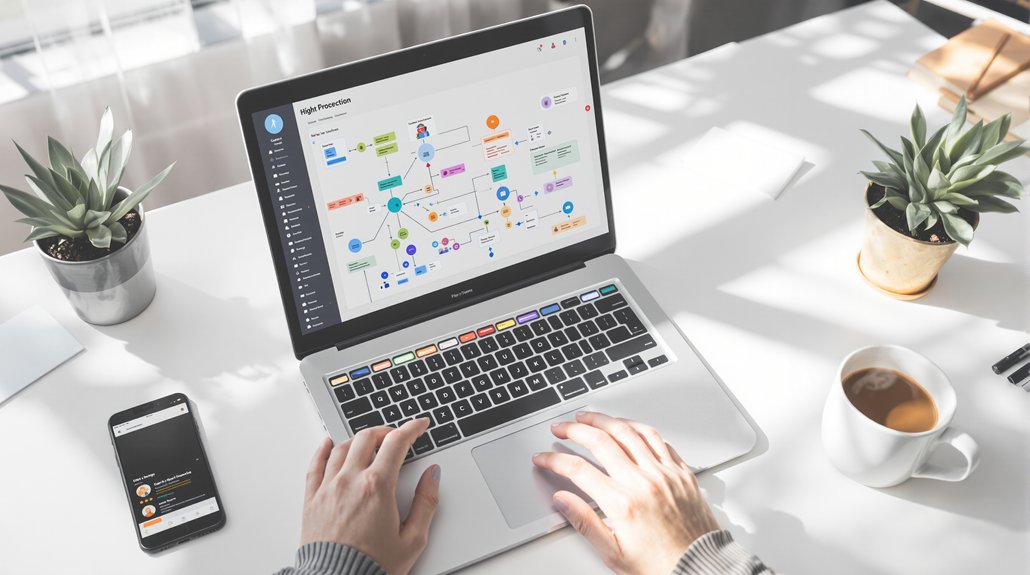
You don’t need coding skills or a technical degree to automate your business processes. Modern no-code automation platforms put power directly in your hands, letting you connect your everyday tools through simple drag-and-drop interfaces.
These platforms work like digital bridges between your apps. When something happens in one tool, it automatically triggers actions in others. You’re finally free from repetitive copy-paste work.
Start with these common automations:
- Customer onboarding: Automatically send welcome emails, create project folders, and add clients to your CRM
- Invoice management: Generate invoices from completed projects and send payment reminders
- Lead capture: Route form submissions to your email, spreadsheet, and follow-up sequence simultaneously
You’ll reclaim hours weekly while eliminating human error from routine tasks.
Which Processes to Automate First for Immediate Time Savings
When you’re staring at dozens of repetitive tasks, picking the right automation targets separates meaningful progress from wasted effort. Focus on processes you’re already executing consistently – automating chaos only scales confusion. Prioritise tasks that consume the most time relative to their value: data entry between platforms, email responses to common questions, and appointment scheduling steal hours from revenue-generating work.
Target processes with clear trigger-action patterns. When a customer pays, send a welcome email. When someone fills a form, create a CRM contact. These straightforward automations deliver immediate returns without complex setup.
Avoid automating decision-heavy tasks initially. Your judgement adds value where multiple variables exist. Start simple, measure time saved, then expand your automation footprint strategically.
How Small Businesses See ROI From Automation in 30 Days or Less

Small businesses measuring automation ROI don’t need spreadsheets full of metrics – they need visible proof their hours aren’t disappearing into administrative quicksand. Within 30 days, you’ll notice concrete changes that free you from repetitive tasks.
Track these immediate wins:
- Hours reclaimed weekly – Count the actual time you’re no longer spending on manual data entry, invoice chasing, or appointment scheduling
- Error reduction – Document fewer customer complaints, billing mistakes, or missed follow-ups
- Revenue opportunities captured – Measure leads you can now pursue because you’re not buried in busywork
You’re not seeking perfection – you’re proving automation works. When you can reinvest five hours weekly into growth activities instead of administrative drudgery, that’s ROI you can feel, not just calculate.
Email Automation That Converts Browsers Into Buyers on Autopilot
Email automation transforms casual website visitors into paying customers while you focus on running your business. You’ll set up targeted sequences that welcome new subscribers, segment your audience based on their behaviour, and automatically recover abandoned carts before those sales slip away. These three automation types work together to nurture relationships and drive conversions without requiring you to manually send every message.
Welcome Series That Nurtures
A welcome series automates that critical first impression. You’re building trust while you sleep, positioning your offer before they forget you exist.
Your automated sequence should:
- Deliver immediate value through a quick win or resource
- Share your origin story to forge emotional connection
- Present your core offer after establishing credibility
This isn’t about pushing sales – it’s about creating freedom from manual follow-up while maintaining genuine relationship-building. Each email fires automatically, nurturing prospects toward purchase decisions without your constant involvement. You’ve escaped the hamster wheel of chasing every new subscriber individually.
Segmentation Drives Higher Conversions
When subscribers click on pricing pages versus blog posts, they’re revealing purchase intent through behaviour – and treating both groups identically kills conversions. Automation lets you segment audiences based on actions, interests, and engagement levels without manual sorting. Tag someone who downloaded your pricing sheet differently than someone who read a general article. Send targeted sequences that match their journey stage. High-intent visitors get product-focused emails with testimonials and limited-time offers. Casual readers receive educational content that builds trust over time. This precision eliminates generic messaging that repels ready buyers while overwhelming curious browsers. You’ll stop wasting opportunities by delivering exactly what each segment needs when they need it. Segmentation transforms random contacts into qualified prospects moving predictably toward purchase.
Abandoned Cart Recovery Sequences
You’re losing money every time someone fills their cart and walks away. Automation recovers that revenue while you sleep. Set up a three-email sequence that triggers automatically:
- First email (1 hour later): Remind them what they’re leaving behind
- Second email (24 hours later): Address common objections or offer social proof
- Third email (48 hours later): Create urgency with a time-sensitive incentive
You’ll recapture 10-15% of abandoned carts without lifting a finger. That’s pure profit you’re currently leaving on the table. Stop chasing every browser manually. Let automation convert hesitant shoppers into paying customers – automatically, consistently, predictably.
CRM Systems That Update Themselves While You Focus on Customers
Everything about managing customer relationships becomes easier when your CRM handles the busywork automatically. You’re freed from manual data entry when your system captures contact information, purchase history, and communication logs without your intervention.
Modern CRMs sync with your email, website forms, and payment platforms to build complete customer profiles while you’re doing actual revenue-generating work. They’ll track every interaction, set follow-up reminders, and flag opportunities you’d otherwise miss.
Your CRM builds customer intelligence automatically while you focus on the work that actually grows your business.
You’ll watch your pipeline update in real-time as deals progress. Customer support tickets get assigned automatically. Sales data flows straight into your dashboard without spreadsheet gymnastics.
This isn’t about replacing human connection – it’s about eliminating the administrative burden that prevents you from delivering it. Your customers deserve your full attention, not whatever’s left after paperwork.
Why a $20 Tool That Integrates Beats a $200 Tool That Doesn’t

The most expensive software in your stack means nothing if it creates data islands that force you into manual workflows. You’re not building a trophy case of premium tools – you’re building a liberation machine that runs without you.
Integration capability trumps feature lists every time. Consider what happens when tools connect:
- Customer data flows from your website to your CRM without copy-pasting
- Invoice payments automatically update your bookkeeping software
- New leads trigger personalised email sequences instantly
That $20 tool with native integrations eliminates hours of weekly busywork. Meanwhile, the $200 standalone solution keeps you chained to your desk, manually transferring data between systems.
Choose tools that shake hands with each other. Your freedom depends on it.
The Three Mistakes That Kill Your First Automation Project
Most automation projects fail before they generate a single hour of saved time, and it’s rarely a technology problem.
Mistake #1: You automate broken processes. If your manual workflow is chaotic, automation amplifies that chaos. Fix the process first, then automate it.
Mistake #2: You try to automate everything at once. You’ll get overwhelmed and abandon the project. Start with one repetitive task that consumes 30+ minutes daily. Master it, then expand.
Mistake #3: You don’t measure what you’re saving. Without tracking actual time recovered, you can’t prove ROI or justify expanding automation. Document your baseline hours spent, then measure the difference.
These mistakes trap you in busywork. Avoid them, and you’ll finally reclaim your schedule.
What Successful Automation Actually Looks Like: Metrics That Matter
Knowing which mistakes to avoid isn’t enough – you need concrete numbers to determine if your automation actually works.
Track these three metrics to measure your freedom:
- Time reclaimed per week: Calculate exact hours saved. If you’re not gaining at least 5-10 hours monthly, your automation’s ineffective.
- Error reduction rate: Manual processes breed mistakes. Your automation should eliminate 80%+ of recurring errors.
- Revenue per hour of work: This reveals your true liberation. If this number isn’t climbing, you’re just busy – not free.
Don’t settle for vague improvements. Demand measurable results. Your automation should demonstrably prove it’s working within 30 days. If you can’t quantify the impact, you haven’t automated – you’ve just complicated your business with more technology.